This is a video I produced online in about 15 minutes, using a new service called: Animoto. Animoto allows you to upload your pictures to the site, add music from their library or add your own and then render the video. When finished, you can e-mail the video to your friends or embed it to a blog like this.
Very cool... I can think of a few projects that could use something like this....
Saturday, September 15, 2007


Sunday, September 09, 2007
Digital Citizenship: The "Killer App" For Education
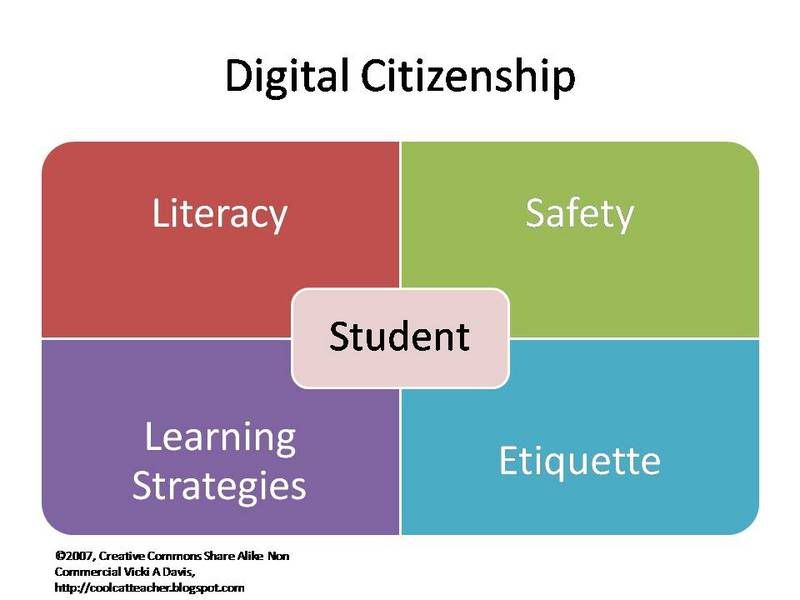
I'm too close... It's too big... I don't know if they can see the forest for the trees, but it is HUGE to me. I keep wondering why everyone can't see it. Can they see it, but choose to ignore it? Is there anyone alive today that believes that the amount of information (media) that we will have access to is going to decrease? Is the educational establishment in a myopic haze that has everyone defending their content to detriment of the students, who spend their waking hours surrounded by four beige walls disconnected from a world that will require them to access more information faster and employ that information in a way that will provide value to themselves or their employer? I often wonder out loud about teachers who were unwilling to grow with the new tools and sources of media available to them and whether they feared being seen as human instead of the oracle of their chosen field of study?
As most of the people reading this blog know, for the past several years, I have felt it is essential to put these tools and skills in the hands of students and teachers. I decided to live by the words of Gandhi and "be the change I wish to see in the world." It is the reason I decided to do the following:
- Reading blogs and educated myself as to what others are doing in education and how the landscape is changing.
- Write this blog, which is close to 100 posts now, over the past two years.
- Go and get my Administrative credential after almost 20 years in the classroom, because I wanted to be part of the change.
- Pushed the idea and wrote the grant for the Global Communications Class and pathway.
- Create the 'Digital Bridge' program to assist students who could not reach the point of entry of the Digital Age.
- Applied for and was accepted into the Google Certified Teacher's program.
- Started speaking at conferences with some of the other Google Certified Teachers to promote the use of these tools to other teachers.
In preview of their conference session at the Tech Forum 2007, Wes Fryer and Miguel Guhlin posted the following introduction to their co-keynote.
Whether we're with them or not, today's young people are venturing into the virtual world where they face challenges of the sort we could hardly have dreamed of a few decades ago. If we ban new technologies in schools we are not protecting our students from them; we're simply asking them to venture into this new world alone. Just as adults must help young people learn to drive before setting them loose behind the wheel of a car, we have a responsibility to help our students and children learn how to safely navigate the virtual environments of the 21st Century. In this session we will explore how to be proactive rather than merely defensive, how to reassure community members without ignoring real dangers, and how to help students make the connections and participate in the collaborations that are crucial to digital citizenship today.So, how do we do this? Some of the following should be a little thought provoking.
- Karl Fisch's post on his blog, 'The Fisch Bowl,' titled, "Is It Okay To Be A Technologically Illiterate Teacher?"
- "Knowledge resides in the network. Students need to know how to find that knowledge, whether it’s on a server in Indiana or in a human brain in India."
- “The illiterate of the 21st century will not be those who cannot read or write, but those who cannot learn, unlearn and relearn.”- Alvin Toffler
- “In times of rapid change, the learners inherit the earth, while the learned find themselves beautifully equipped to deal with a world that no longer exists.”- Eric Hoffer
- In Australia, the government spent several million dollars creating a filter to keep pornography away from teens and children. It took a 16 year-old student 30 minutes to bypass the filter. Australia Teen Cracks Filter
Here are a few video's that might provide a little thinking about the issues of Digital Citizenship and Cyber Safety.
Saturday, September 08, 2007
Feeling comfortable with the Shifts.....
 My last post talked about some of the 'shifts' that this blog will go through, since I am writing this personally and have created a new blog specifically for SMUHSD EdTech Professional Development. (SMUHSD Tech Bytes) But there are other 'shifts' that are going on that are worth noting.
On Thursday, I was involved in a training session on the use of 'DataDirector,' a new data presentation tool for schools to better use data to guide instruction. I have been a fan of 'DataDirector' for a two years now, I was very pleased when the SMUHSD decided to dump Edusoft and pick up 'Data Director.' In speaking with some of the other teachers in the session, the reviews were very, very positive.
In the afternoon, I was part of a panel of EdTech people speaking to a group at the Office 2.0 conference in San Francisco. The members of the group had been corresponding with each other via e-mail and building out some ideas on the 'Classroom 2.0' social networking site on Ning and on a wiki provided by 'Wikispaces.' This group of people are 'HEAVY HITTERS' in the EdTech arena and I am a High School teacher and Technology Coordinator. Steve Hargadon, the moderator of the group, is one of the Infinite Thinking Machine bloggers, as well as founder of k12 Computers. Steve Dembo, is the author of the Teach42 blog and works for the Discovery Educator Network. Adam Frey, is one of the co-founders of Wikispaces, a wiki tool that is free for educators. Anastasia Goodstein, is the author of the 'Ypulse' blog as well as the book, "Totally Wired: What Teens and Tweens are Really Doing Online." Sylvia Martinez, is the President of Generation YES, a firm that assists schools in making transitions into 21st Century learning. Rushton Hurley, is the founder of NextVista for Learning, a site that allows students and teachers to post educational video to share with others. Karen Greenwood-Henke, is the founder of Nimble Press, a San Francisco educational consulting firm, and the author of the 'Grant Wrangler Blog,' aimed at the educational market. Guillaume Cohen, is the founder of Veodia, a live streaming video firm that provides service to conferences and other events. Veodia was on hand and took video of the entire presentation, which you can watch here, look for the 'Classroom 2.0 presentation.
Friday started with another meeting, the County Technology Coordinators as SMCOE. The meeting was a little awkward, since the County Technology Director has recently resigned and there isn't a replacement as of yet. Kathleen Ferenz, from CTAP and the GoogleIT sessions this summer, pinch hit for the county. To her credit, Kathleen set up a wiki for the County Technology Coordinators to begin the process of organizing for the remainder of the school year. There were plenty of new faces in the room, it made me feel a little dated. Most of the brainstorming session looked at different district goals and there was plenty of talk about "Cyber Safety," "Digital Citizenship" and "Information Literacy." Three topics we have done some work on in our Global Communications course.
This school year has started with lots of ambivalence and uncertainty and I know it is going to keep changing on all fronts; school, district, county, state and nationally. As an individual, I will just have to learn to 'feel comfortable with the shifts.' Perhaps all of us should?
Sunday, September 02, 2007
Going in a different direction...
 The school year is now three weeks old. Hard to believe, especially since my daughter doesn't start school in Fremont, CA until this coming Wednesday, September 5, 2007. The school year has been particularly busy with a variety of different things going on and I have been doing double duty for some of it.
During the summer, I published to this blog frequently, finishing up on some of my 'works in progress' during this time. I received many positive comments from teachers in the SMUHSD regarding some of the posts that were here. There were also those who disliked the frequency of the posts during the summer and the fact that there was 'opinion' in some of my postings. At the first SMUHSD Tech Coordinators Meeting, the issue of this blog came up for discussion. The issues of frequency of posts and posts that were 'opinionated' that went out to the masses were discussed. As a result, I am going to continue to write on this blog like I have in the past, seeing what I believe are the emerging trends in educational technology and sharing my opinions as to the best ways these emerging technologies can be used in the classroom. In addition, I will create a second blog, SMUHSD Tech Bytes that will publish only once per month and will have just professional development activities and resources on it. This blog will be e-mailed to all SMUHSD teachers.
There will be some duplication on the two blogs, but for the most part, this blog will be my space where I can be a little contraversial and espouse some views that are my opinion and not be worried about offending someone due to the nature and number of posts. The SMUHSD Tech Bytes blog will be limited to professional development items and it may have some links back to this blog and will only be published once a month.
For those of you who read this blog and are not SMUHSD teachers, nothing will change, maybe a little, since I won't be holding things back on this blog. It will be me, 100% of the time. Thanks for reading and please feel free to comment on what you see here anytime.
Friday, August 17, 2007
Google @ School
 I had a great opportunity to attend the 'Google @ School' presentations yesterday at the 'Googleplex' in Mountain View, CA. (I'm pictured here with Cheryl Davis and Kathleen Ferenz, whom I presented the GoogleIT sessions this summer and will repeat them in Monterey this November!) There were presentations from many of the teams working on the 'free Google Tools' that have a variety of educational uses. The tools included, Docs and Spreadsheets, Gmail, YouTube (I found out that one of the YouTube project leads is a Capuchino HS grad), Talk, Calendar and Pages. The best part of the sessions were the testimonials from Northwestern and Arizona State Universities about their implementation of the Google @ School tools and the 'domain page' that allows information technology directors to customize the tools and the level of access students and teachers have to each individual tool.
I this could be a great solution for many educational institutions because Google has assured all educational institutions of the following:
- No cost for Google Apps for Educational users.
- No maintenance for district IT departments.
- Gmail can be filtered and blocked by districts by adding their own filtering, blocking device
- No selling or providing of data to any third parties by Google for the duration of the program.
- Districts have complete control as to which tools students and teachers have access through a dashboard that allows certain functions to be 'turned off.'
- Students can access their data and documents from any Internet accessible computer.
This might not be the right fix now, but it could be something that could be beneficial for all schools. Only time will tell.
If you want to take a look or want more information about Google @ School, check it out here!
Friday, August 03, 2007
World Clock: Running Statistics at Your Fingertips
Ever wanted to visually represent to students how the worlds population is changing in real time? The world clock provided by a site called 'Poodwaddle,' allows you to embed a version of their world clock into your web page or blog. The clock uses sources like the CIA Factbook, World Health Organization and the US Census Bureau to calculate the data. They do make a disclaimer that the data is based on statistical analysis from the sources above and may not be accurate in real time, it is very interesting to see and to have students see how the population of the world is changing all the time. The buttons across the top allow you to view the statistics on an annual, month, day or current basis. The 'Now' button allows you to clear the counters and watch them rise in real time. Take a look below and see how the population of world changes before your eyes...
Poodwaddle.com
Poodwaddle.com
Poodwaddle also offers a variety of different resources that you can use on your web page or blog for free...
Wednesday, August 01, 2007
Educational Entrepreneurship in the 21st Century
 With the beginning of the 2007-2008 school year quickly approaching, (August 14 for me!) I wanted to look at why some projects succeed and others fail. This is important to those of us who are involved in Educational Technology and how the changes in information will change how teachers teach and students learn. Today, I happened across a few blog posts and a news post from from the business field that might shed some light on the future of education and how educators might deal with it.
Presently, there is a summit at Stanford University, where Start Up CEO's are meeting and discussing which growth opportunities will fuel the expansion of the Internet and technology services. Unsurprisingly, these entrepreneurs identified teens as the group driving innovation within the Technology field. KGO-TV did a short piece on the conference and an interview with the host, Tony Perkins of Always On. Watch the Video here!
 There were also three blog posts today that fit the idea of teachers becoming entrepreneurs of their own teaching. The first is from Guy Kawasaki's blog, "How to Change the World" and guest blogger, Glenn Kelman, the CEO of Redfin. His post, "On the Other Hand: The Flip Side of Entrepreneurship" listed several ideas that ring true for educators as we change the nature of how we teach. In reading this article, I could see how the motivations to join a start up tech firm (remember most lose money and die!) are very similar to becoming a teacher and how the process of building a start up and a school run parallel paths. The first item, "True believers go nuts at the slightest provocation," rings true with me, since it talks about Jerry Maguire type memos written late at night, outlining new or updated practices for the firm. Count me in, Guilty as charged!
 The second blog post comes from Scott Adams', Dilbert Blog. In his "Career Advice" post, Scott makes the case that one of the best ways to get ahead is to be pretty good (top 25%) in more than one thing instead of being the best in only one thing. In education, we are often called upon to do more than what we were 'trained' to do in our student teaching programs. Working with students in extracurricular programs (coaching athletic teams, clubs, etc.) or serving in leadership roles as department chairpersons, WASC group leaders or serving on district level councils. While there are some great teachers that teach in one subject area during their entire teaching career, there are also many teachers that have had to 're-invent' themselves during their career, or had to show they could perform many different tasks to get the job initially. Being flexible and showing the ability to be good at more than one thing is definitely something that is valued in an educational environment and will become even more important in the future. I can count at least 20 different classes, roles, coaching assignments, etc. that I have performed during my tenure in the SMUHSD.
 The last blog post I want to mention is David Warlick's, 2Cents Blog post titled, "History = Future?" In this post he makes the statement that classrooms are becoming places where media, technology and information come together and can create rich and deep learning environments for all students. He also states that all teachers and educational institutions will have to acknowledge three things in the next few years.
 - We are preparing children for a future we can not describe
- We are preparing children, who as a generation, are enjoying a rich information experience outside-the-classroom.
- We are preparing children within a new and dynamic information environment with new qualities that seem ready made for teaching and learning.
Subscribe to:
Posts (Atom)